
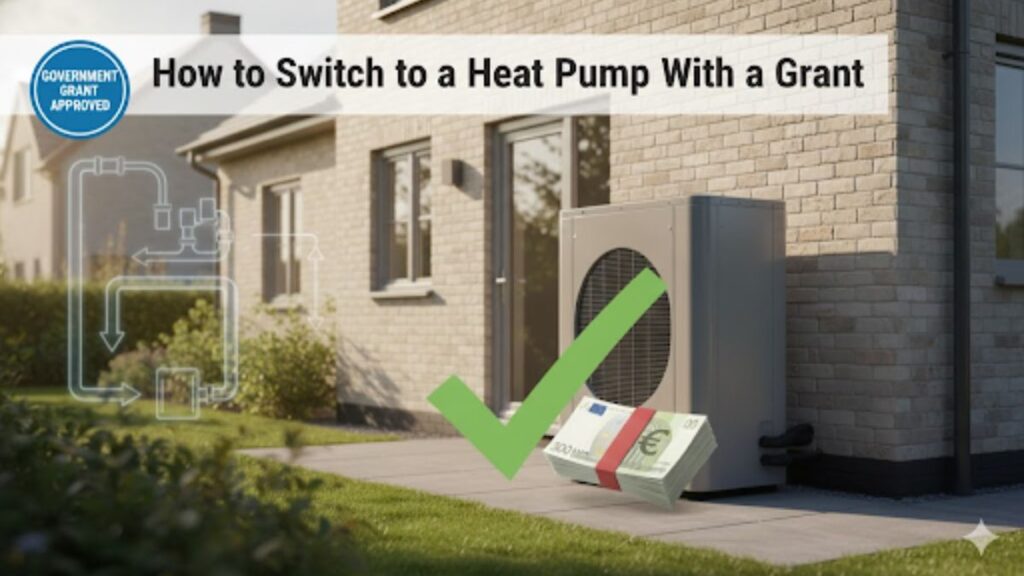
Did you know you might not have to pay full price to get a heat pump for your home? Many people across the UK are now wondering exactly how they can switch to a heat pump using a government grant, but they don’t know where to start.
The government provides schemes such as the ECO4 Scheme to subsidise the replacement of old, inefficient oil or gas boilers. However, few know how to do so or what is involved in the process.
In this article, we describe how you can switch to a heat pump using readily available free heat pump grants in the UK, step by step.
What Is a Heat Pump?
A heat pump is an eco-friendly heating system. It draws heat out of the air or earth around your house and transfers it into warming your rooms and supplying hot water. Imagine a fridge, only in reverse. Whereas a fridge draws heat out to cool things in it, a heat pump draws heat in to warm your house and water.
There are two primary types:
- Air source heat pumps drawing heat from the air.
- Ground source heat pumps which extract heat from the ground.
Even in cold weather, a heat pump will function efficiently. In contrast to gas or oil-fired heating, where fuel is combusted to generate heat, heat pumps just move available heat, and as such, they use much less energy.
Why Are Heat Pumps Popular Now?
The UK government is aiming for net-zero carbon emissions by 2050, and heating homes is one of the biggest challenges. Heating accounts for about 14% of the UK’s carbon emissions.
Gas boilers are set to be gradually phased out in favour of cleaner alternatives. That’s where heat pumps come in — they use electricity but produce less CO₂ compared to burning gas or oil.
Heat pumps do, however, cost a lot to install, between £8,000 to £15,000, depending on the system and house. The government has established schemes to offset these expenses by providing grants to homeowners.
What Grants Are Available for Heat Pumps?
There are two primary schemes in the UK to promote the transition to heat pumps.
ECO4 Scheme (Energy Company Obligation)
The ECO4 scheme covers the full cost of the heat pump. It is available to:
- Low-income households.
- Poorly rated homes (E, F, or G rated on an EPC).
- People receiving certain government benefits.
Under ECO4, you can avail of:
- A free heat pump installation (air source).
- Additional insulation or energy efficiency upgrades if needed.
This scheme is supported by big energy firms, but you won’t have to pay anything at all, as the cost is paid in full for those who qualify.
Boiler Upgrade Scheme (BUS)
The Boiler Upgrade Scheme offers:
- £7,500 off the cost of an air source or ground source heat pump.
- Available to homeowners and private landlords in England and Wales.
- Need to have an existing valid EPC with no outstanding recommendations for improving insulation.
Unlike ECO4, BUS is not based on income or benefits — it’s available more widely but only covers part of the cost. You will need to pay the balance after the grant is applied.
Who Can Apply?
Let’s discuss it step by step. You might qualify if:
- You own your home or privately rent (with landlord permission).
- You receive qualifying benefits (like Pension Credit, Universal Credit, Housing Benefit, Child Tax Credit).
- Your home’s EPC rating is E, F, or G.
- You do not have a gas metre at your property.
How to Apply for the Free Heat Pump Grant
Let’s go through the step-by-step process.
Step 1: Check Your Eligibility
Before you do anything, make sure you qualify.
- For ECO4, you can check online or contact an approved installer.
- For BUS, you need an MCS-certified installer who will apply for the voucher on your behalf.
If you’re unsure, many installers offer free eligibility checks on their websites.
Step 2: Get a Home Assessment
Once you’re confirmed as eligible, the next step is a home assessment.
An assessor or installer will visit your property to:
- Examine your current heating system.
- Check your home’s insulation and energy rating.
- Decide what kind of heat pump suits your home.
- Plan any extra upgrades needed (like pipework or new radiators).
This step ensures your home is suitable for a heat pump before moving forward.
Step 3: Receive a Plan and Quote
After the assessment, the installer will:
- Prepare a detailed plan for the work.
- Provide a quote (if applicable) showing what the grant covers and what, if anything, you’ll need to pay.
- Explain timelines for installation.
For ECO4, most work is fully covered. For BUS, the grant reduces the total cost, but you may still need to cover the remaining balance.
Step 4: Installation
The heat pump installation process usually takes a few days. Installers will:
- Fit the heat pump outside your home (for air source) or connect the ground loop (for ground source).
- Update your radiators or heating system if needed.
- Install or adjust your hot water system.
The team will also test the system and explain how to operate it.
Key Things to Know Before Switching
Switching to a heat pump is a big step, so here’s what you should keep in mind.
-
Insulation Matters
Heat pumps work best in well-insulated homes. Before you install one, make sure:
- Your loft insulation is up to standard.
- Cavity walls are insulated (if possible).
- Doors and windows are draught-proof.
Without proper insulation, the system may struggle to keep your home warm.
-
Radiator Temperatures Will Feel Different
Heat pumps use lower flow temperatures (around 35–45°C) compared to boilers (60–70°C). This means:
- Radiators may feel cooler to the touch.
- The system needs to run longer to keep the home evenly warm.
This is normal and part of how the system saves energy.
-
You Need Outdoor Space
For air source heat pumps, you need space outside for the unit, about the size of a washing machine, with good airflow.
Ground source heat pumps require garden space for underground loops.
-
Running Costs Depend on Your Home
If you heat with electricity or oil, you’re likely to save by switching.
If you’re connected to mains gas, then you will save depending on energy costs, how well-insulated your house is, and how you operate the system.
The Bottom Line
Shifting to a heat pump in the UK with a grant is one of the best decisions residents can make. You can either go through ECO4 or the Boiler Upgrade Scheme, as there is significant financial assistance available to make low-carbon heating affordable.
Since these systems operate at lower flow temperatures than traditional boilers, many homeowners wonder Are Radiator Covers Safe or if they might hinder the efficiency of their new setup. By ensuring your heat emitters are optimized, you can enjoy lower bills, a warmer home, and a cleaner future—all without stressing about enormous initial payments.
Get started by assessing your eligibility today and take the first step to cleaner, lower-cost heating.